News
News
News
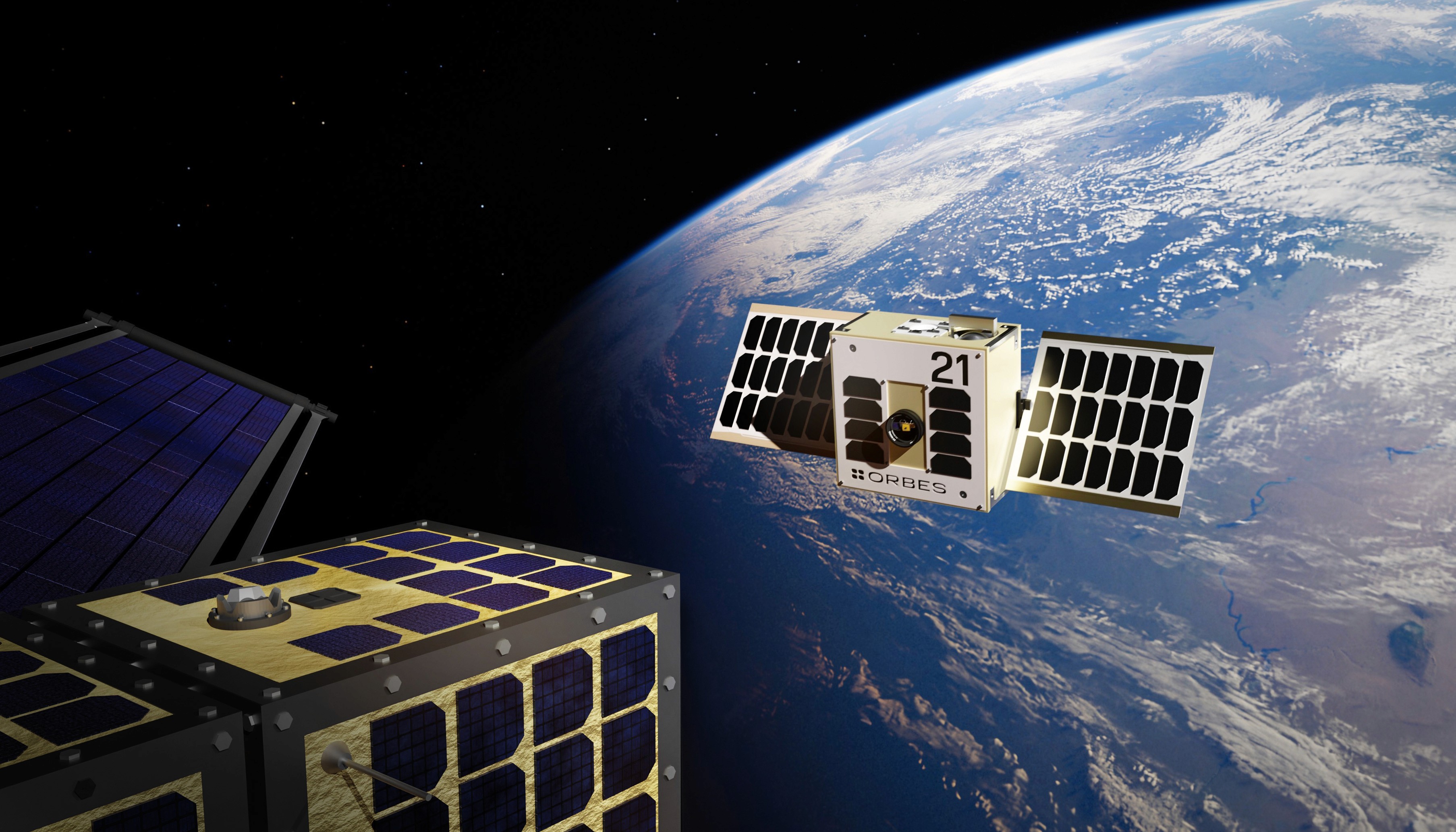
Artist render: 2 Exo-ORB inspection satellites around the Symphony Space Adagio space station.
Artist render: 2 Exo-ORB inspection satellites around the Symphony Space Adagio space station.
ORBES unveils
Exo-ORB; Symphony Space signs letter of intent
ORBES unveils
Exo-ORB, Symphony Space signs letter of intent
[LOS ANGELES, CA - July 27 2026] — ORBES today unveiled Exo-ORB, a compact autonomous escort satellite that flies alongside large space assets to inspect, film and eventually maintain them, and announced that autonomous station developer Symphony Space has signed the first letter of intent to use it.
A new generation of space infrastructure has a maintenance problem
The space economy is about to get a lot bigger. Orbital data centers, kilometer-scale solar farms, and commercial stations built to last 15 years or more are all on the way.
Each one represents multi-millions of dollars in capital, and many of them will be uncrewed. That raises an important question: how do you take care of a massive structure in orbit when nobody is there to look after it?
What the ISS teaches us
For now, there's only one structure with a maintenance track record: the International Space Station. Astronauts perform spacewalks at least once a month to keep it running. By ORBES's analysis of NASA records and estimates by former NASA astronaut and ORBES advisor Terry Virts , roughly 85% of spacewalks are planned upgrades and maintenance and the other 15% are corrective emergency repairs or science. And astronaut time is expensive: NASA puts the commercial cost at $130,000 per hour, all-in.
Exo-ORB: autonomous eyes and hands
The Exo-ORB satellite is close to 12U in volume, less than 26kg, designed to undock from its host and fly freely 10–20 meters away, moving around the structure to image it from any angle.
Exo-ORB’s first configuration captures 4K visual imagery for preventive inspection, catching damage, debris strikes and degradation before they become failures. That same imagery produces striking third-person footage of the host vehicle.
"The problem with maintenance is it’s easy not to care until something breaks," said ORBES CEO Anna Shaposhnik. "We first offer customers stunning visual imagery in addition to inspection. Recently SpaceX put a camera on a Starlink to capture a 3rd person video on Starship flight 5 for heat-shield tile inspection, but that requires their specific pez dispenser. Exo-ORB will give anyone that capability.”
A future configuration adds two to three robot arms, one to grip the structure, the others to perform tasks. The robot arm design will be validated aboard an ISS demonstration flight of their interior robot ORB in early 2027.
Crucially, ORBES frames this as augmenting astronauts, not replacing them: "We give crews all the data they need in advance, so their time goes to extending critical science operations instead of repetitive repairs," Shaposhnik said, "and for uncrewed infrastructure, autonomous maintenance is the only option."

Artist render: 2 Exo-ORB inspection satellites around the Symphony Space Adagio space station.
Heritage and a different bet
Exo-ORB is inspired by NASA proximity-operations tests like NASA Johnson’s AERCam, Seeker/Kenobi, and the R5 satellite series, which is pioneering low-cost agile methodology for satellite development. In 2025, their R5-S7 performed an in-space close inspection near a Falcon 9 upper stage after de-orbit burn.
For the first time, ORBES defines this category as a commercial offering: a locally hosted inspection & maintenance robot for large infrastructure. The offering stands apart from large independent servicers that must travel between orbits, such the Space Force RG-XX neighborhood watch constellation, also known as Andromeda, or commercial servicers by Rogue, Turion, and Starfish Space.
Artist render: 2 Exo-ORB inspection satellites around the Symphony Space Adagio space station.
[LOS ANGELES, CA - July 27 2026] — ORBES today unveiled Exo-ORB, a compact autonomous escort satellite that flies alongside large space assets to inspect, film and eventually maintain them, and announced that autonomous station developer Symphony Space has signed the first letter of intent to use it.
A new generation of space infrastructure has a maintenance problem
The space economy is about to get a lot bigger. Orbital data centers, kilometer-scale solar farms, and commercial stations built to last 15 years or more are all on the way.
Each one represents multi-millions of dollars in capital, and many of them will be uncrewed. That raises an important question: how do you take care of a massive structure in orbit when nobody is there to look after it?
What the ISS teaches us
For now, there's only one structure with a maintenance track record: the International Space Station. Astronauts perform spacewalks at least once a month to keep it running. By ORBES's analysis of NASA records and estimates by former NASA astronaut and ORBES advisor Terry Virts, roughly 85% of spacewalks are planned upgrades and maintenance and the other 15% are corrective emergency repairs or science. And astronaut time is expensive: NASA puts the commercial cost at $130,000 per hour, all-in.
Exo-ORB: autonomous eyes and hands
The Exo-ORB satellite is close to 12U in volume, less than 26kg, designed to undock from its host and fly freely 10–20 meters away, moving around the structure to image it from any angle.
Exo-ORB’s first configuration captures 4K visual imagery for preventive inspection, catching damage, debris strikes and degradation before they become failures. That same imagery produces striking third-person footage of the host vehicle.
"The problem with maintenance is it’s easy not to care until something breaks," said ORBES CEO Anna Shaposhnik. "We first offer customers stunning visual imagery in addition to inspection. Recently SpaceX put a camera on a Starlink to capture a 3rd person video on Starship flight 5 for heat-shield tile inspection, but that requires their specific pez dispenser. Exo-ORB will give anyone that capability.”
A future configuration adds two to three robot arms, one to grip the structure, the others to perform tasks. The robot arm design will be validated aboard an ISS demonstration flight of their interior robot ORB in early 2027.
Crucially, ORBES frames this as augmenting astronauts, not replacing them: "We give crews all the data they need in advance, so their time goes to extending critical science operations instead of repetitive repairs," Shaposhnik said, "and for uncrewed infrastructure, autonomous maintenance is the only option."
Artist render: 2 Exo-ORB inspection satellites around the Symphony Space Adagio space station.
[LOS ANGELES, CA - July 27 2026] — ORBES today unveiled Exo-ORB, a compact autonomous escort satellite that flies alongside large space assets to inspect, film and eventually maintain them, and announced that autonomous station developer Symphony Space has signed the first letter of intent to use it.
A new generation of space infrastructure has a maintenance problem
The space economy is about to get a lot bigger. Orbital data centers, kilometer-scale solar farms, and commercial stations built to last 15 years or more are all on the way.
Each one represents multi-millions of dollars in capital, and many of them will be uncrewed. That raises an important question: how do you take care of a massive structure in orbit when nobody is there to look after it?
What the ISS teaches us
For now, there's only one structure with a maintenance track record: the International Space Station. Astronauts perform spacewalks at least once a month to keep it running. By ORBES's analysis of NASA records and estimates by former NASA astronaut and ORBES advisor Terry Virts, roughly 85% of spacewalks are planned upgrades and maintenance and the other 15% are corrective emergency repairs or science. And astronaut time is expensive: NASA puts the commercial cost at $130,000 per hour, all-in.
Exo-ORB: autonomous eyes and hands
The Exo-ORB satellite is close to 12U in volume, less than 26kg, designed to undock from its host and fly freely 10–20 meters away, moving around the structure to image it from any angle.
Exo-ORB’s first configuration captures 4K visual imagery for preventive inspection, catching damage, debris strikes and degradation before they become failures. That same imagery produces striking third-person footage of the host vehicle.
"The problem with maintenance is it’s easy not to care until something breaks," said ORBES CEO Anna Shaposhnik. "We first offer customers stunning visual imagery in addition to inspection. Recently SpaceX put a camera on a Starlink to capture a 3rd person video on Starship flight 5 for heat-shield tile inspection, but that requires their specific pez dispenser. Exo-ORB will give anyone that capability.”
A future configuration adds two to three robot arms, one to grip the structure, the others to perform tasks. The robot arm design will be validated aboard an ISS demonstration flight of their interior robot ORB in early 2027.
Crucially, ORBES frames this as augmenting astronauts, not replacing them: "We give crews all the data they need in advance, so their time goes to extending critical science operations instead of repetitive repairs," Shaposhnik said, "and for uncrewed infrastructure, autonomous maintenance is the only option."

Commercial validation
Symphony Space is the first to sign a letter of intent for Exo-ORB to film and maintain its autonomous station platform, Adagio. Under the agreement, Exo-ORB will fly aboard Symphony Space's Prelude demonstrator mission, targeting launch in late 2027 to early 2028, expanding to the full-scale Adagio uncrewed station beginning in 2029. ORBES plans to begin in close partnership with Symphony Space mission control, and eventually sell the Exo-ORB hardware and software outright.
"We built Adagio to make space missions simpler, more cost-effective and faster to deploy, and to last, with a design life of at least 15 years," said Symphony Space CEO Merry Walker. "ORBES will ensure our station is regularly serviced without the need for a crew, extending its lifetime well beyond the autonomous stations operating today. Capturing images and video of the work performed will not only support maintenance, but beautifully translates what's happening in orbit back to people on Earth."
Rapid-response government applications
The same logic extends to national security. Space Force operators manage fleets of high-value satellites with limited ability to tell whether a problem stems from a hardware fault, a debris strike, radiation or an adversary's action. A local escort like Exo-ORB offers eyes at the point of need with modular imaging payloads. ORBES envisions Exo-ORBs to be pre-positioned in orbital warehouses, robotically integrated with a chosen payload, have their depleted cold gas tank exchanged for a pre-filled one, and then be dispatched on their mission.
The approach aligns with the Space Force's Objective Force 2040 vision, which projects up to 30,000 U.S.-operated security satellites and, as SpaceNews has reported, is focused on "more resilient and distributed architectures, moving away from a small number of high-value satellites toward layered, proliferated systems that can survive attacks and continue operating.
Heritage and a different bet
Exo-ORB is inspired by NASA proximity-operations tests like NASA Johnson’s AERCam, Seeker/Kenobi, and the R5 satellite series, which is pioneering low-cost agile methodology for satellite development. In 2025, their R5-S7 performed an in-space close inspection near a Falcon 9 upper stage after de-orbit burn.
For the first time, ORBES defines this category as a commercial offering: a locally hosted inspection & maintenance robot for large infrastructure. The offering stands apart from large independent servicers that must travel between orbits, such the Space Force RG-XX neighborhood watch constellation, also known as Andromeda, or commercial servicers by Rogue, Turion, and Starfish Space.

ABOUT ORBES
ORBES is building the robot workforce of space. Two products are ORB, a free-flying robot inside space stations, and Exo-ORB, an escort satellite for external inspection, imaging, and servicing of large space infrastructure. ORB is set to fly to the ISS early 2027, and the first Exo-ORB demonstration is planned for late 2027. ORBES recently completed the Techstars San Deigo powered by SDSU accelerator in fall of 2025 and the Draper University program in Spring of 2026. Learn more at www.orbes.space.

ABOUT ORBES
ORBES is building the robot workforce of space. Two products are ORB, a free-flying robot inside space stations, and Exo-ORB, an escort satellite for external inspection, imaging, and servicing of large space infrastructure. ORB is set to fly to the ISS early 2027, and the first Exo-ORB demonstration is planned for late 2027. ORBES recently completed the Techstars San Deigo powered by SDSU accelerator in fall of 2025 and the Draper University program in Spring of 2026. Learn more at www.orbes.space.
Commercial validation
Symphony Space is the first to sign a letter of intent for Exo-ORB to film and maintain its autonomous station platform, Adagio. Under the agreement, Exo-ORB will fly aboard Symphony Space's Prelude demonstrator mission, targeting launch in late 2027 to early 2028, expanding to the full-scale Adagio uncrewed station beginning in 2029. ORBES plans to begin in close partnership with Symphony Space mission control, and eventually sell the Exo-ORB hardware and software outright.
"We built Adagio to make space missions simpler, more cost-effective and faster to deploy, and to last, with a design life of at least 15 years," said Symphony Space CEO Merry Walker. "ORBES will ensure our station is regularly serviced without the need for a crew, extending its lifetime well beyond the autonomous stations operating today. Capturing images and video of the work performed will not only support maintenance, but beautifully translates what's happening in orbit back to people on Earth."
Rapid-response government applications
The same logic extends to national security. Space Force operators manage fleets of high-value satellites with limited ability to tell whether a problem stems from a hardware fault, a debris strike, radiation or an adversary's action. A local escort like Exo-ORB offers eyes at the point of need with modular imaging payloads. ORBES envisions Exo-ORBs to be pre-positioned in orbital warehouses, robotically integrated with a chosen payload, have their depleted cold gas tank exchanged for a pre-filled one, and then be dispatched on their mission.
The approach aligns with the Space Force's Objective Force 2040 vision, which projects up to 30,000 U.S.-operated security satellites and, as SpaceNews has reported, is focused on "more resilient and distributed architectures, moving away from a small number of high-value satellites toward layered, proliferated systems that can survive attacks and continue operating.
ABOUT SYMPHONY SPACE
Symphony Space Inc. is building Adagio, commercial uncrewed space stations designed for modular payload hosting, technology demonstration, and sustained orbital operations. Founded in 2025, Symphony Space is targeting its demonstrator mission in late 2027/early 2028 and a full-scale Adagio launch in 2029. Learn more at www.symphony-space.com.
Media Contact(s):
Anna Shaposhnik, Founder, CEO - ORBES
Emma Friedman, Chief of Staff - Symphony Space
ABOUT SYMPHONY SPACE
Symphony Space Inc. is building Adagio, commercial uncrewed space stations designed for modular payload hosting, technology demonstration, and sustained orbital operations. Founded in 2025, Symphony Space is targeting its demonstrator mission in late 2027/early 2028 and a full-scale Adagio launch in 2029. Learn more at www.symphony-space.com
Media Contact(s):
Anna Shaposhnik, Founder, CEO - ORBES
Emma Friedman, Chief of Staff - Symphony Space
Commercial validation
Symphony Space is the first to sign a letter of intent for Exo-ORB to film and maintain its autonomous station platform, Adagio. Under the agreement, Exo-ORB will fly aboard Symphony Space's Prelude demonstrator mission, targeting launch in late 2027 to early 2028, expanding to the full-scale Adagio uncrewed station beginning in 2029. ORBES plans to begin in close partnership with Symphony Space mission control, and eventually sell the Exo-ORB hardware and software outright.
"We built Adagio to make space missions simpler, more cost-effective and faster to deploy, and to last, with a design life of at least 15 years," said Symphony Space CEO Merry Walker. "ORBES will ensure our station is regularly serviced without the need for a crew, extending its lifetime well beyond the autonomous stations operating today. Capturing images and video of the work performed will not only support maintenance, but beautifully translates what's happening in orbit back to people on Earth."
Rapid-response government applications
The same logic extends to national security. Space Force operators manage fleets of high-value satellites with limited ability to tell whether a problem stems from a hardware fault, a debris strike, radiation or an adversary's action. A local escort like Exo-ORB offers eyes at the point of need with modular imaging payloads. ORBES envisions Exo-ORBs to be pre-positioned in orbital warehouses, robotically integrated with a chosen payload, have their depleted cold gas tank exchanged for a pre-filled one, and then be dispatched on their mission.
The approach aligns with the Space Force's Objective Force 2040 vision, which projects up to 30,000 U.S.-operated security satellites and, as SpaceNews has reported, is focused on "more resilient and distributed architectures, moving away from a small number of high-value satellites toward layered, proliferated systems that can survive attacks and continue operating.
ABOUT ORBES
ORBES is building the robot workforce of space. Two products are ORB, a free-flying robot inside space stations, and Exo-ORB, an escort satellite for external inspection, imaging, and servicing of large space infrastructure. ORB is set to fly to the ISS early 2027, and the first Exo-ORB demonstration is planned for late 2027. ORBES recently completed the Techstars San Deigo powered by SDSU accelerator in fall of 2025 and the Draper University program in Spring of 2026. Learn more at www.orbes.space.
ABOUT SYMPHONY SPACE
Symphony Space Inc. is building Adagio, commercial uncrewed space stations designed for modular payload hosting, technology demonstration, and sustained orbital operations. Founded in 2025, Symphony Space is targeting its demonstrator mission in late 2027/early 2028 and a full-scale Adagio launch in 2029. Learn more at www.symphony-space.com.
Media Contact(s):
Anna Shaposhnik, Founder, CEO - ORBES
Emma Friedman, Chief of Staff - Symphony Space
